Pages

Showing posts with label National Land Marks. Show all posts

Wednesday, May 13, 2026

President Lincoln’s Cottage

In the spirit of enjoying and studying U.S. history, I have discovered that there are many fascinating historic sites connected to America’s past. One example is President Lincoln’s Cottage, a historic home used by Abraham Lincoln on the grounds of the Soldiers’ Home, now known as the Armed Forces Retirement Home, near the Petworth neighborhood in Washington, D.C. In 2000, it was designated a national monument called the President Lincoln and Soldiers’ Home National Monument.

I recently visited the site and was a bit disappointed. The interior of the house can only be visited through a guided tour, which I personally found rather boring. The tour provided very little information about the house itself or the individual rooms. The house contains almost no furniture actually used by the Lincoln family. There were only a few decorative pieces that had no connection to either the house or the family who lived there. The only notable item was a replica of the writing desk President Lincoln supposedly used, located in one of the second-floor rooms.

The tour guide spent nearly an hour and a half telling small pieces of historical stories that, to me, did not flow together very well. One strange aspect of the tour was that the guide repeatedly asked the audience how we felt after listening to short 10-second voice recordings played from an iPad.

Outside, there are almost no gardens, but the exterior architecture of the house is beautiful. The cottage is surrounded by lovely lawn grounds and a magnificent tree beside the building, which creates a peaceful atmosphere.

There are two entrances to the Soldiers’ Home grounds, but only one is open to visitors. We ended up driving around in circles twice before finally figuring that out.

Next to the cottage is Rock Creek Church, a beautiful structure from outside, it is not open to the public.


The replica of the desk that President Lincoln used to write Lincoln the Emancipation Proclamation

Covered Bridges in America

Covered bridges are one of those distinctly American sights that feel almost nostalgic today, but they were originally built for very practical reasons.

In the late 18th and especially the 19th century, as the United States expanded westward, there was a huge need for durable, affordable bridges. Most early bridges were made of wood because it was abundant and easy to work with. Engineers developed wooden truss systems—like the famous designs patented by Ithiel Town and Theodore Burr—which allowed bridges to span longer distances while remaining relatively lightweight.

The key problem was weather. Exposed wooden bridges deteriorate quickly due to rain, snow, sun, and temperature changes. Moisture causes wood to rot, while repeated wet-dry cycles weaken the structure. Without protection, a wooden bridge might last only 10–15 years.

That’s why they were covered.

Adding a roof and siding acted like a protective shell, shielding the structural trusses from the elements. This simple idea dramatically extended a bridge’s lifespan—often to 50 years or more, and in some cases well over a century. In other words, the covering wasn’t decorative at first; it was a cost-saving measure that reduced maintenance and replacement.

My visit to a couple of covered bridges came about almost by accident—I was googling Frederick, and covered bridges in the area popped up. It immediately piqued my interest.

The only time I had ever seen a covered bridge before was in the movie The Bridges of Madison County—a romantic film that even won Academy Awards recognition. Seeing them in real life felt like stepping into a scene from that story, I was simply struck by how beautiful these bridges are!


Historic Roddy Road Covered Bridge

Historic Cramer Covered Bridge


Tuesday, April 21, 2026

Doha 2) West Bay, Downtown Doha

After visiting the National Museum of Qatar, I took an Uber to West Bay, Doha’s modern downtown. This area, once a stretch of largely undeveloped coastline, has transformed over just a few decades alongside Qatar’s rapid growth fueled by oil and natural gas wealth. Today, West Bay stands as the city’s central business district, filled with high-rise towers designed by leading international architects. Walking through the area, every turn revealed a new and striking building—each with its own distinct style—creating a skyline that feels both futuristic and constantly evolving.

Monday, August 28, 2023

I Love New York-2) Grand Central Terminal

Designated New York City Landmark and a National Historic Landmark, Grand Central Terminal, often simply referred to as Grand Central, is a historic and iconic transportation hub located in Midtown Manhattan, New York City. 

Grand Central Terminal was originally constructed in 1871 as Grand Central Depot, a railroad terminal. However, due to various expansions and renovations, the current terminal that we see today was completed in 1913.

The terminal's design is a blend of architectural styles, including Beaux-Arts and neoclassical influences. It was designed by the architectural firms Reed and Stem and Warren and Wetmore.

The exterior of Grand Central features a grand façade with a massive central arch flanked by columns and statues. The interior is equally impressive, featuring a large main concourse with a celestial-themed ceiling, a clock, and elegant marble finishes.

The main concourse is the heart of Grand Central Terminal. It's a vast and stunning space with a vaulted ceiling painted with constellations, making it look like a starry night sky.

The iconic four-sided clock, located atop the Information Booth in the center of the concourse, is a popular meeting point for visitors.


==============================================================

The grand staircases that lead to the lower levels are a prominent feature of the concourse, and they are often used for various events and gatherings.

Grand Central Terminal serves as a major transportation hub for commuters and travelers. It primarily serves Metro-North Railroad lines heading to the northern suburbs of New York, including Westchester, Putnam, and Dutchess counties, as well as parts of Connecticut.

The terminal also connects to the New York City Subway system, making it a crucial transit point for both local and regional travel.

Grand Central Terminal is known for its diverse range of retail shops and dining establishments. The lower levels of the terminal house the Grand Central Market, offering various fresh produce, specialty foods, and artisanal products.

Grand Central Terminal faced the threat of demolition in the mid-20th century due to the decline of rail travel and proposed urban development projects. However, a successful preservation campaign led by activists and historic preservationists, including Jacqueline Kennedy Onassis, saved the terminal from destruction.

The terminal underwent an extensive restoration in the 1990s, which brought it back to its former glory. The restoration focused on repairing and cleaning the architectural elements, including the iconic ceiling.

Grand Central Terminal has appeared in numerous movies, TV shows, and works of literature, becoming a symbol of New York City and its history.

Friday, February 11, 2022

Christmas at Annapolis Maryland

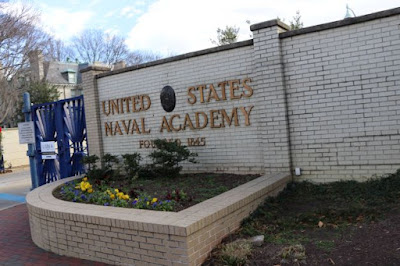
Located on the Chesapeake Bay at the mouth of the Seven River, 25 miles south of Baltimore and 30 miles east of Washington DC, Annapolis is the capitol city of Maryland and home to the United States Naval Academy. Surrounded by the charming stores, restaurants, walkable streets and beautiful boats on Chesapeake Bay, Annapolis is a picture-perfect place and popular tourist destination. Photos were taken while walking around downtown Annapolis and the Naval Academy campus. 

Note that United States Naval Academy and Maryland Statehouse are considered a National Landmarks.

Around Downtown Annapolis


Maryland Statehouse


Naval Academy Campus